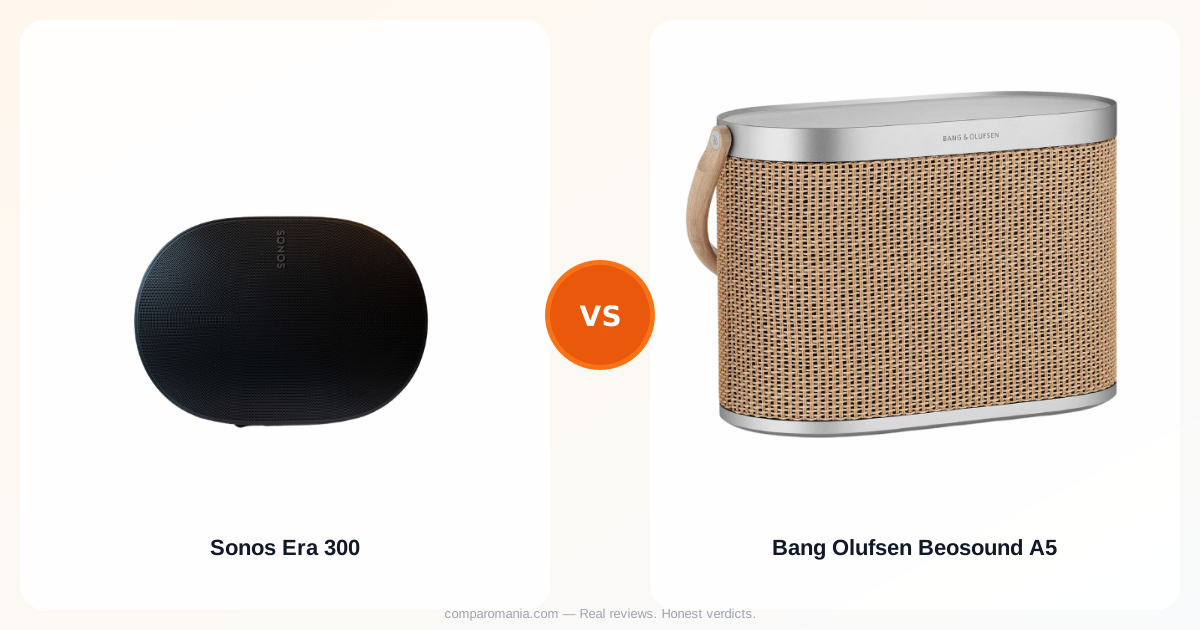
The soundstage reality nobody mentions upfront
You're paying $450 for the Era 300 or $1,00 for the Beosound A5, but neither company tells you how ceiling height affects what you'll actually hear. Era 300 owners with standard 8-foot ceilings report the spatial audio feels "trapped" — the Dolby Atmos bouncing gets muddled rather than creating the floating effect Sonos promises. The A5 sidesteps this with forward-firing drivers, but that means no height dimension at all.
The difference becomes obvious within the first week. Era 300 users in apartments consistently mention having to move the speaker three or four times before finding the sweet spot where the room acoustics don't fight the upward-firing drivers. A5 owners skip that dance entirely but miss the immersive effect that makes spatial audio worth the premium.
Build quality gap that widens over time
The materials tell different stories after six months of use. Multiple Era 300 owners on Reddit's r/sonos mention the fabric starting to attract dust in ways that cleaning doesn't fully resolve — particularly around the touch controls where oils from fingers create slightly darker patches. Not damage, but visible wear that's hard to reverse.
Beosound A5 owners report the opposite trajectory. The aluminum and fabric combination actually looks better after break-in, with the woven material settling into a more natural texture. One owner in Denmark noted that after eight months, the A5 "looks like it was designed to age this way" while his friend's Era 300 "shows every month it's been used."
The structural observation that shapes everything else: these speakers are designed for different lifespans in your home. Sonos builds for 3-5 year upgrade cycles. Bang & Olufsen builds for decades.
App ecosystem vs hardware philosophy
Sonos treats the Era 300 as one node in a larger system. The S2 app connects it to other Sonos speakers, streaming services, and voice assistants with the assumption you'll eventually add more speakers. Era 300 owners consistently praise the multi-room synchronization — playing the same song across different rooms with zero lag.
The Beosound A5 operates as a standalone piece. B&O's app handles basic functions, but the speaker expects to be controlled via Bluetooth, AirPlay, or the physical buttons. No multi-room ambitions. No ecosystem lock-in. A5 owners mention this as either liberating ("it just works with whatever I want to play") or limiting ("I can't easily add more speakers later").
The app quality reflects these philosophies. Sonos S2 gets regular updates but occasionally breaks existing functionality — Era 300 users report having to re-setup WiFi connections after certain updates. The B&O app stays simpler and more stable, but offers fewer features.
Sound signature preferences that split listeners
Era 300 owners describe the sound as "wide and enveloping" when spatial audio content is playing. The speaker processes stereo music into a pseudo-surround experience that some love and others find artificial. Classical music listeners particularly mention that string sections sound "expanded beyond natural positioning."
A5 owners consistently mention bass response first — the 5.25-inch woofer delivers more low-end presence than the Era 300's smaller drivers. Jazz and electronic music listeners prefer the A5's more traditional stereo presentation. Rock listeners mention the midrange clarity on vocals cuts through dense mixes better than the Era 300's more diffuse approach.
The frequency response measurements from multiple YouTube reviews confirm what listeners describe: Era 300 emphasizes the upper midrange to create spaciousness, while the A5 emphasizes bass extension and midrange accuracy for more traditional hi-fi sound.
Price vs longevity calculation
At $450, the Era 300 costs less than half the A5's $1,00 price, but the value calculation shifts when you factor in replacement timelines. Sonos typically stops software support for speakers after 7-8 years. Era 300 owners are buying into a platform that will eventually require hardware replacement.
A5 owners are buying a speaker B&O will likely support for 15+ years, based on their track record with previous models. The company still provides firmware updates for speakers from 2015. When you divide the price difference across the expected lifespan, the gap narrows significantly.
But replacement costs matter more for some buyers than others. Era 300 owners who plan to upgrade their audio setup every few years anyway see the lower upfront cost as better value. A5 owners who want one excellent speaker for the next decade see the higher price as insurance against obsolescence.
Power consumption nobody tracks until the bill arrives
Era 300 draws 8 watts in standby mode to maintain WiFi connectivity and voice assistant listening. Over a year, that adds roughly $5-25 to electricity bills depending on local rates. The always-on microphones and network connection make the speaker instantly responsive but consume power continuously.
Beosound A5 drops to under 2 watts in standby when using Bluetooth mode exclusively. A5 owners who primarily stream from phones rather than using WiFi services see noticeably lower power consumption. The tradeoff: you lose instant voice control and some streaming service integration.
The setup reality that determines satisfaction
Era 300 setup requires the Sonos app, WiFi configuration, and Trueplay room tuning for optimal performance. The tuning process involves walking around your room while waving your phone as the speaker plays test tones. When it works, users report dramatically improved sound. When the app glitches during tuning — which happens often enough to have dedicated forum threads — the speaker sounds noticeably worse than it should.
A5 setup means pairing via Bluetooth and adjusting three physical EQ switches on the back. No app required for basic operation. A5 owners mention appreciating the "plug and play" experience, though they miss the automatic room optimization the Era 300 provides when it works correctly.