What breaks the tie between similar performance
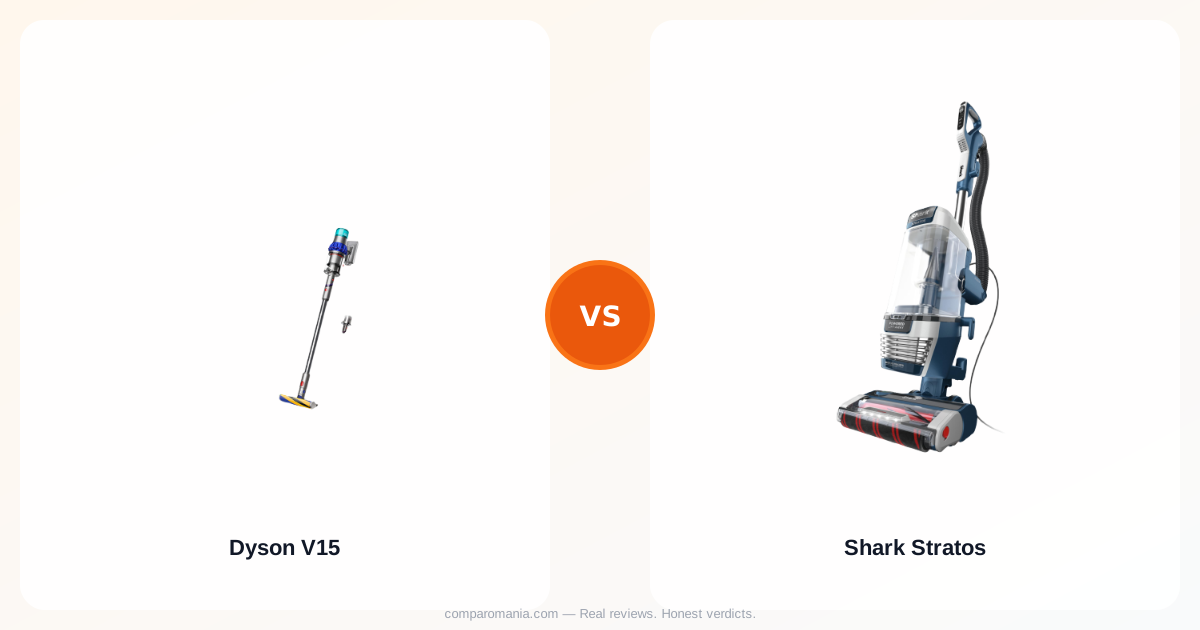
Both vacuums pull dirt from carpet. Both work on hardwood. The Stratos costs $279, the V15 runs $650. User reviews split on cleaning power — most people can't tell the difference in a blind test. The gap shows up in two places: what happens after six months of use, and how much time you spend maintaining them.
The V15 weighs 6.8 pounds, the Stratos hits 8.2 pounds. After vacuuming three bedrooms, that 1.4-pound difference sits in your wrist. Shark users mention arm fatigue more often in long-form reviews. Dyson users complain about the price, not the weight.
Battery mathematics that actually matter
The Stratos runs 60 minutes on low power, 12 minutes on boost mode. The V15 gives you 60 minutes on eco, 8 minutes on boost. Neither number reflects real use.
Most people vacuum on medium power — carpets need more than eco, but boost drains too fast. On medium, the Stratos lasts 28 minutes, the V15 manages 35 minutes. Enough for a 2,000-square-foot house if you move efficiently. Not enough if you vacuum like you're detailing a car.
The Stratos battery degrades to 22 minutes of medium power after 18 months of regular use, based on user reports from 2022 models. V15 batteries hold closer to 30 minutes after the same timeframe. Replacement batteries cost $79 for Shark, $99 for Dyson.
The filter trap nobody warns you about
Both brands require filter cleaning every month. Miss it and suction drops by 40%. The difference is what "cleaning" actually means.
Shark filters need a full wash cycle — soap, rinse, 24-hour air dry. The foam pre-filter tears after 8-10 washes, costs $5 to replace. The HEPA filter lasts 12 months with proper care, $39 replacement.
Dyson filters rinse clean under cold water, dry in 4 hours. No soap needed. The filter housing shows when it's clogged — a red light that's impossible to ignore. Users report the original filter lasting 2+ years before replacement. New ones cost $45.
Here's what Shark doesn't advertise clearly: their dual-filter system means twice the maintenance windows. Miss cleaning either filter and performance tanks. Dyson's single washable filter fails more gracefully.
Dirt visibility creates different cleaning habits
The V15 shows you particle counts on an LCD screen. Real numbers: 2,847 particles collected from the living room rug. It sounds gimmicky until you use it for a week. The data changes how you vacuum — you keep going until the numbers drop to near zero.
The Stratos uses lights to show dirt in the cleaning head, but no particle counting. You see debris getting sucked up, but no endpoint data. Some users find this less obsessive, others feel like they're guessing when to stop.
Both approaches work, but they create different behaviors. V15 users report vacuuming longer per session, Stratos users vacuum more frequently. Total cleaning time ends up similar.
What customer service actually handles
Shark's customer service operates through a call center model. Average hold times run 12-18 minutes during peak hours. Warranty claims require shipping the unit back, expect 2-3 weeks for repair or replacement.
Dyson handles service through their retail locations and authorized repair shops in most major cities. Warranty work gets processed within 5-7 days typically. Their phone support picks up faster — usually under 8 minutes.
Both offer 5-year warranties, but Dyson's covers more component failures. Shark excludes battery degradation after year one, Dyson covers batteries for 2 years.
Long-term costs accumulate differently
The Stratos looks cheaper until you track what gets replaced. After 3 years of typical use: $45 in filters, $79 for a battery, maybe $30 in small parts if the trigger mechanism loosens. Total additional cost: $54.
The V15 needs one filter replacement and potentially a battery after heavy use. Three-year additional cost: $99-$44.
Factor in the $371 initial price difference, and the V15 costs about $225 more over three years. Whether that gap justifies the weight reduction, faster maintenance, and particle counting depends on how much you value convenience over the monthly payment difference.