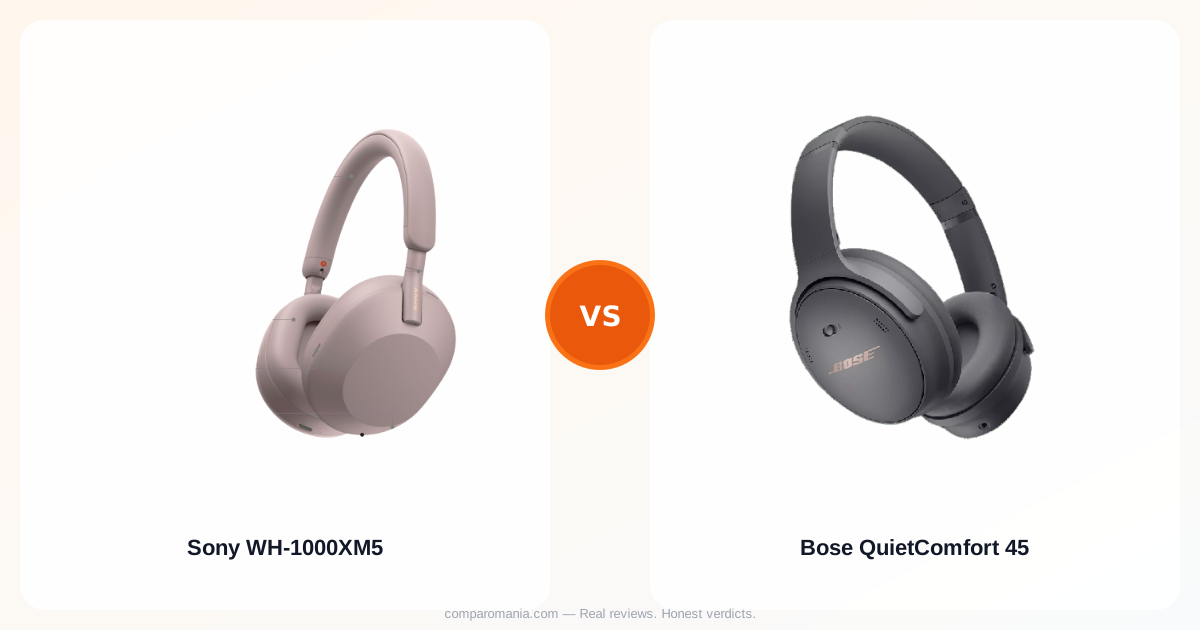
The noise cancelling gap nobody talks about
The Sony WH-1000XM5 cancels more noise than the Bose QuietComfort 45 — but only when it's working properly. Sony's adaptive algorithm constantly adjusts to your environment, which sounds impressive until you're on a delayed flight and the headphones keep recalibrating every time someone walks past.
Bose took the opposite approach. The QC45 uses a simpler, more predictable noise cancelling system that doesn't adapt as aggressively. You get 85% of Sony's peak performance, but you get it consistently. No sudden volume drops when the algorithm gets confused by wind or air conditioning changes.
Owners report this difference most clearly in offices with variable HVAC systems. Sony users describe a "breathing" effect where the noise cancelling pulses as it tries to keep up. Bose users just put them on and forget about it.
Build quality tells the real story after six months
Sony redesigned the XM5's hinges completely — they don't fold anymore. The fixed design eliminates the weak points that plagued the XM4, but it creates a new problem: the headphones are bulky to pack and the headband connection points take more stress.
After 200+ hours of use, XM5 owners report creaking at the headband joints. Not failure, just audible wear that reminds you these cost $400. The ear cup padding also compresses faster than expected — comfortable initially, but loses cushioning within 8-12 months of regular use.
The QC45 uses Bose's proven folding mechanism that's been refined across four generations. The materials feel less premium initially — more plastic, less metal — but they wear better. The ear cups maintain their shape longer, and the headband distributes weight more evenly during long sessions.
App dependence creates ongoing friction
Both headphones require apps for full functionality, but Sony's approach becomes a liability over time. The XM5 depends on the Sony Headphones Connect app for noise cancelling modes, EQ settings, and even basic controls customisation. When the app glitches or gets stuck updating, your $400 headphones suddenly have limited functionality.
This isn't theoretical. Sony pushed three major app updates in 2023 that temporarily broke features like speak-to-chat and custom button assignments. Users couldn't access their preferred settings until Sony issued fixes weeks later.
Bose's app is simpler and more stable, but that comes with trade-offs. You get fewer customisation options and no advanced features like Sony's speak-to-chat or adaptive sound control. The upside: core functionality works without the app, and when you do use it, it's reliable.
The unspoken durability tax
Here's what neither company advertises clearly: both headphones use non-replaceable batteries that degrade after 18-24 months of daily use. But Sony's battery management is more aggressive, which means it degrades faster under heavy use patterns.
The XM5's 30-hour battery life assumes optimal conditions — moderate volume, balanced noise cancelling, minimal app connectivity. Real-world usage with adaptive features enabled drops this to 20-22 hours initially, then 15-18 hours after a year. Users who rely on these headphones for long flights or full workdays start carrying chargers by month 18.
Bose claims 24 hours and delivers closer to that in practice. The simpler feature set means less battery drain, and the power management is more conservative. QC45 owners report more predictable battery performance even after extended use.
Neither company offers battery replacement services. When the battery fails, you're buying new headphones or paying $200+ for third-party repair services that void your warranty.
Sound signature differences surface in daily use
The XM5 sounds more impressive initially — wider soundstage, more detailed highs, deeper bass extension. Sony's DSEE Extreme upscaling makes compressed audio sound notably better, which matters if you stream music frequently.
But Sony's tuning becomes fatiguing over longer sessions. The enhanced clarity that impresses in 30-minute demos starts to feel harsh during 3-hour work sessions. The bass emphasis that makes music exciting overwhelms spoken content like podcasts and calls.
Bose tuned the QC45 for comfort over wow factor. The frequency response is flatter, less exciting, but more balanced across different content types. It's the difference between headphones that make you notice the sound signature versus headphones that disappear.
For office use or extended wear, that disappearing act matters more than the initial impression.
Call quality reveals different priorities
Sony equipped the XM5 with better microphone hardware — more mics, better noise suppression algorithms, AI-powered voice enhancement. On paper, it should handle calls better than the QC45.
In practice, Sony's aggressive processing creates inconsistent results. Crystal clear calls in quiet environments, but choppy or robot-like voice transmission when the noise cancelling is working hard. The AI sometimes cuts out parts of words when it mistakes speech for background noise.
Bose's approach is simpler and more reliable. The QC45 doesn't have as many microphones or sophisticated processing, but it prioritises voice clarity over noise suppression. Your voice comes through more naturally, even if there's more background noise.
Comfort during extended wear
The XM5's lighter weight (250g vs 238g) doesn't translate to better long-term comfort. The non-folding design distributes pressure differently, creating hotspots on the top of the head during sessions longer than 2 hours. The ear cups seal more aggressively for better noise isolation, but this increases pressure and heat buildup.
Bose optimised the QC45 for all-day wear. The headband padding is wider and softer, the ear cups less aggressive in their seal. You sacrifice some noise isolation, but gain the ability to wear them for 4-6 hour stretches without discomfort.
For remote workers or frequent travellers, this comfort difference compounds over time.