Your fitness tracker died halfway through yesterday's run, leaving you guessing whether you hit your targets. The notification buzzed just as you were finding your rhythm, then nothing. Black screen for the rest of your workout.
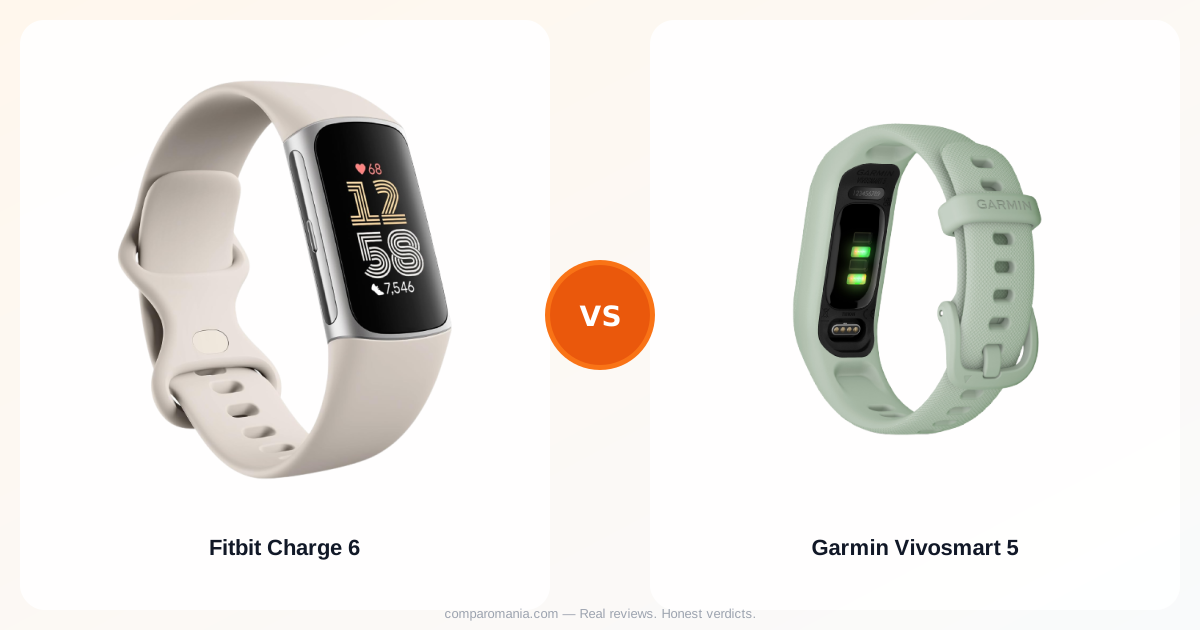
The Fitbit Charge 6 and Garmin Vivosmart 5 represent two different philosophies about what a fitness tracker should prioritize. One bets on app integration and detailed metrics. The other focuses on battery endurance and core tracking accuracy.
Battery life tells the whole story
Garmin's Vivosmart 5 runs for seven days between charges. Users consistently report hitting six to seven days even with notifications enabled and sleep tracking running. The Charge 6 manages about four days with moderate use, dropping to two or three if you enable always-on display and frequent GPS workouts.
That difference compounds quickly. Garmin users charge once per week, usually Sunday nights. Fitbit users find themselves plugging in twice weekly, sometimes catching a dead battery before morning workouts. The charging cable becomes part of your travel checklist with the Charge 6.
GPS accuracy splits the difference
Both devices track outdoor workouts, but the Charge 6 includes built-in GPS while the Vivosmart 5 relies on your phone's GPS connection. For runners who leave their phone at home, this matters immediately. The Charge 6 maps your route independently, though it takes 30-45 seconds longer to acquire satellites than dedicated running watches.
Phone-dependent GPS works fine when you're carrying your device anyway. Cyclists and walkers often prefer this approach since it preserves battery life and their phone stays accessible. But runners specifically chose the Charge 6 for phone-free workouts in user reviews.
Distance accuracy varies by environment. Both devices track within 2-3% of known distances on flat routes. In areas with tree cover or urban canyons, the Charge 6's independent GPS performs slightly better, though neither device matches dedicated running watch precision.
App ecosystem creates the real divide
The truth nobody mentions upfront: most fitness trackers become expensive step counters within six months because the companion apps don't sustain engagement. Fitbit's ecosystem keeps users logging food, joining challenges, and comparing stats with friends long after the novelty wears off.
Garmin Connect serves serious athletes well but feels sterile for casual users. The interface prioritizes data over encouragement. Social features exist but don't drive daily engagement the way Fitbit's badges, challenges, and friend feeds do. Users describe Garmin Connect as thorough but not addictive.
Fitbit's Premium subscription adds guided workouts, detailed sleep analysis, and stress management tools for $9.99 monthly. Most Charge 6 users eventually subscribe, making the true cost $19 annually above the device price. Garmin includes most advanced features without ongoing fees.
Sleep tracking reveals different priorities
Both devices monitor sleep stages and provide morning scores, but they measure different things. The Charge 6 tracks sleep duration, restfulness, and time in each sleep stage, then generates a daily Sleep Score based on your patterns. Users report the scores align well with how they actually feel.
Vivosmart 5 focuses on sleep optimization, offering insights about optimal bedtimes and wake windows based on your natural patterns. The "Body Battery" feature shows energy levels throughout the day, helping users identify when they're genuinely tired versus just bored. Long-term Garmin users find this more actionable than Fitbit's scoring approach.
Neither device forces you to wear it to bed, but sleep data only appears if you do. The Vivosmart 5's longer battery life makes this more sustainable since you're not constantly choosing between charging and sleep tracking.
Display and daily use differences
The Charge 6's color touchscreen feels more like a smartwatch. Notifications appear clearly, and swiping through stats feels intuitive. Always-on display mode keeps the screen visible during workouts but cuts battery life in half.
Vivosmart 5's black and white display seems basic until you use it outdoors. Bright sunlight doesn't wash it out the way color screens do. The tap interface takes longer to learn but works reliably with wet or gloved hands. Some users prefer this during actual workouts.
Both devices handle text notifications adequately. Neither supports call answering or voice replies. For basic notification filtering, the experience feels similar.
Workout tracking tells two stories
The Charge 6 automatically recognizes 20+ exercise types and asks if you want to log undetected workouts. Heart rate zones appear during exercise, and the GPS tracks route and pace for outdoor activities. Post-workout analysis includes elevation changes, split times, and recovery suggestions.
Vivosmart 5 covers basic exercise detection but focuses on all-day activity rather than workout specifics. It tracks steps, active minutes, and general heart rate patterns more than detailed exercise metrics. Users who mainly walk, bike casually, or do gym workouts find this sufficient.
Serious runners and cyclists eventually upgrade from either device to dedicated sport watches. But for mixed fitness activities, the Charge 6 provides more detailed workout data while the Vivosmart 5 encourages more daily movement.